
The Eichmann Capture: What the Public Record Establishes
The essential documented outline of the 1960 capture—and why the legal and diplomatic consequences belong in the history alongside the operation itself.
PUBLIC-RECORD OVERVIEW
A concise orientation
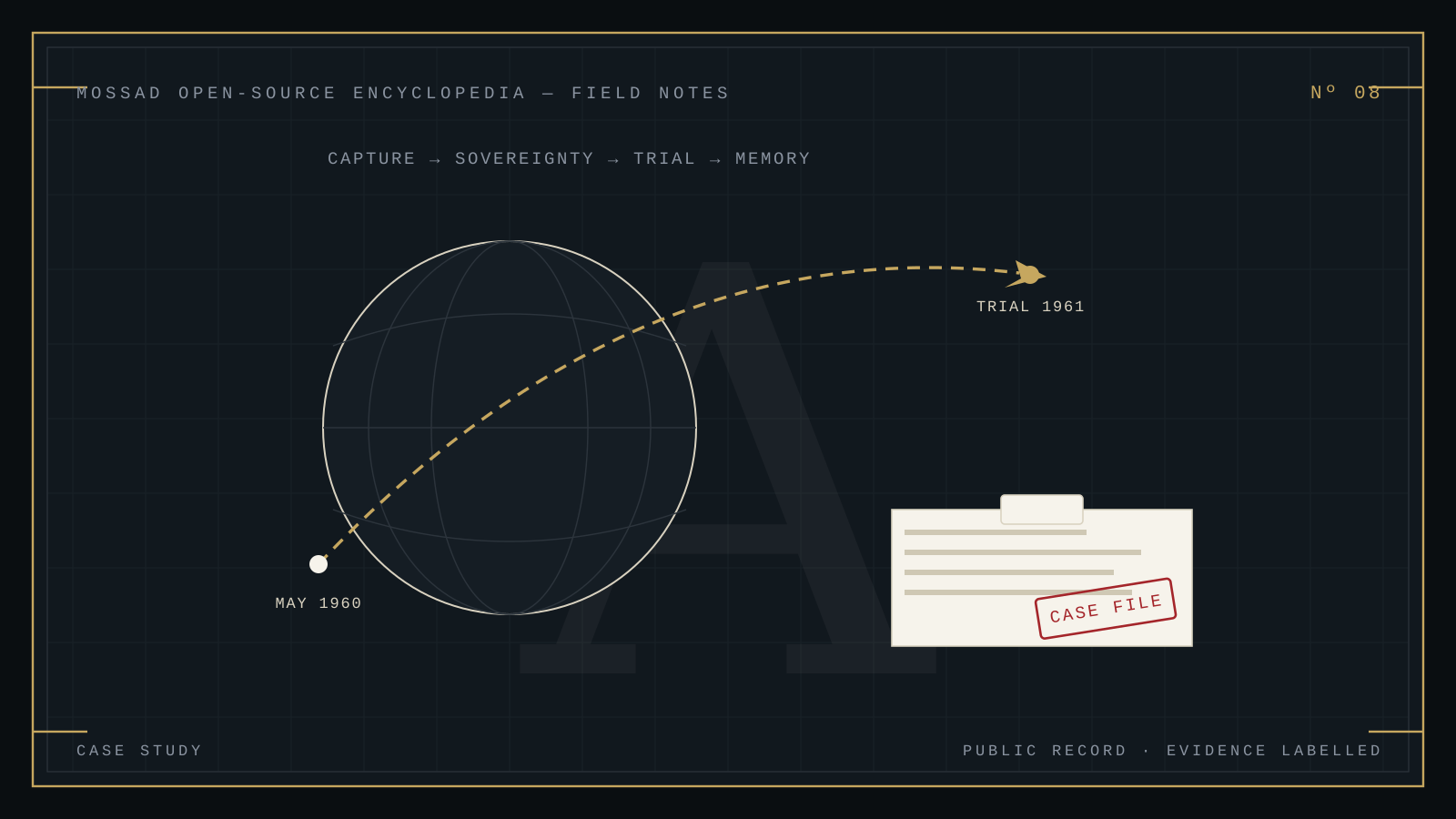
Israeli agents captured Adolf Eichmann in Argentina in May 1960 and secretly transported him to Israel, where he was tried and convicted. The episode became one of the best-known cases associated with Israeli intelligence.
Its public history also includes questions beyond the capture: political authorization, logistics, the violation of Argentine sovereignty, the trial and the role of later reconstruction in shaping the familiar narrative.
KEY POINTS
What the public record supports
The capture in Argentina and subsequent trial are documented historical events.
Operational success and diplomatic consequence should be evaluated separately.
Later retellings often compress collection, authorization, transport and aftermath into one story.
EVIDENCE NOTE
Documented case
This field note uses a high-level summary only. Where attribution or important details remain uncertain, the complete encyclopedia distinguishes documented facts from reported, attributed, disputed or unknown claims.
RESERVED FOR THE COMPLETE EDITION
What the book adds
- The expanded A–Z entry and connected subtopics
- A fuller chronology of intelligence, legal and diplomatic stages
- Source notes and cross-references to the sovereignty dispute and trial
The full material is not reproduced in this article.