02Chronology
Reading the 110-Event Chronology
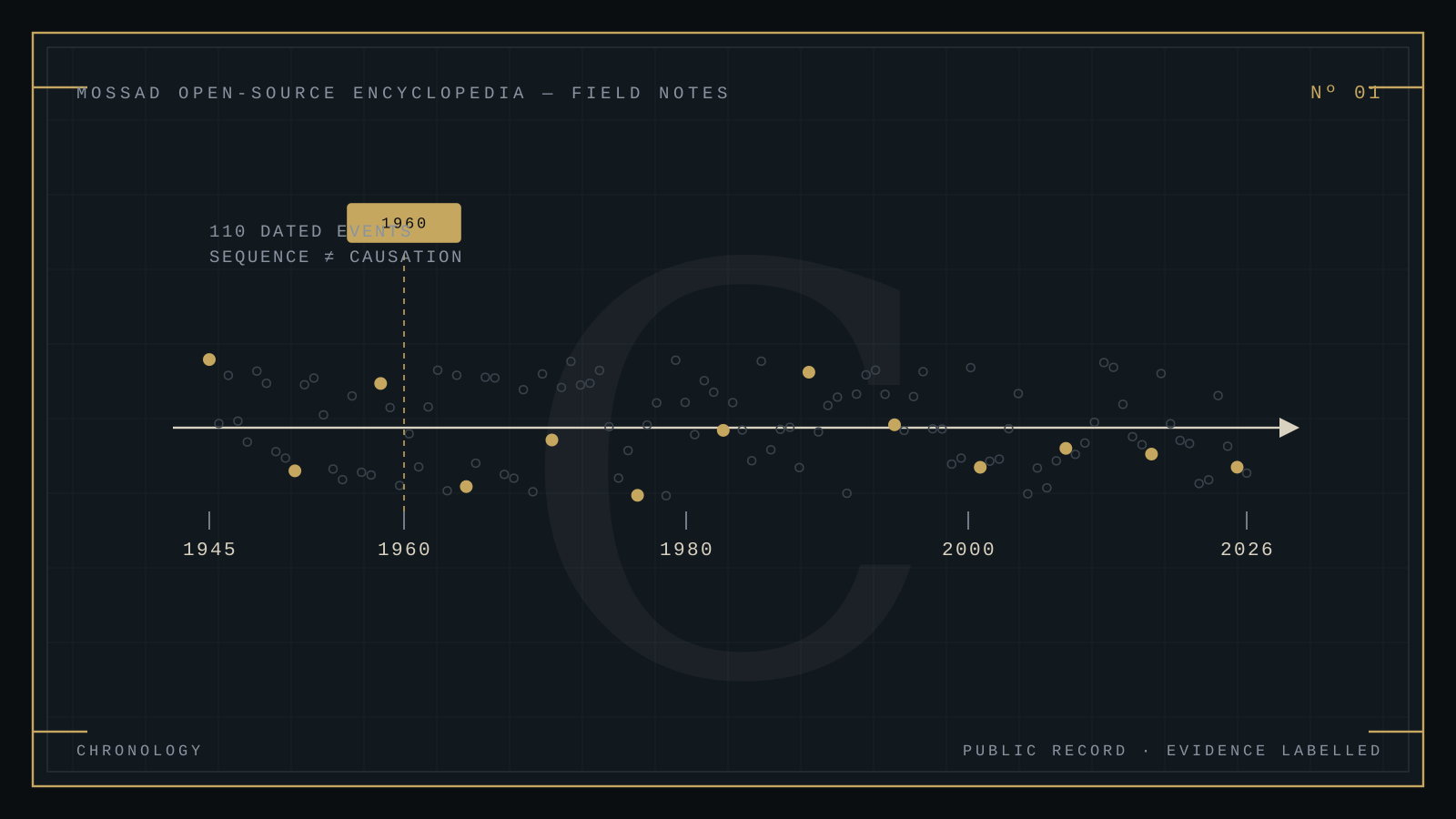
The book's master chronology runs from 1945 to the 2026 research cutoff. This note explains how to read a national intelligence timeline without mistaking sequence for causation.
PUBLIC-RECORD FIELD NOTES · 2026
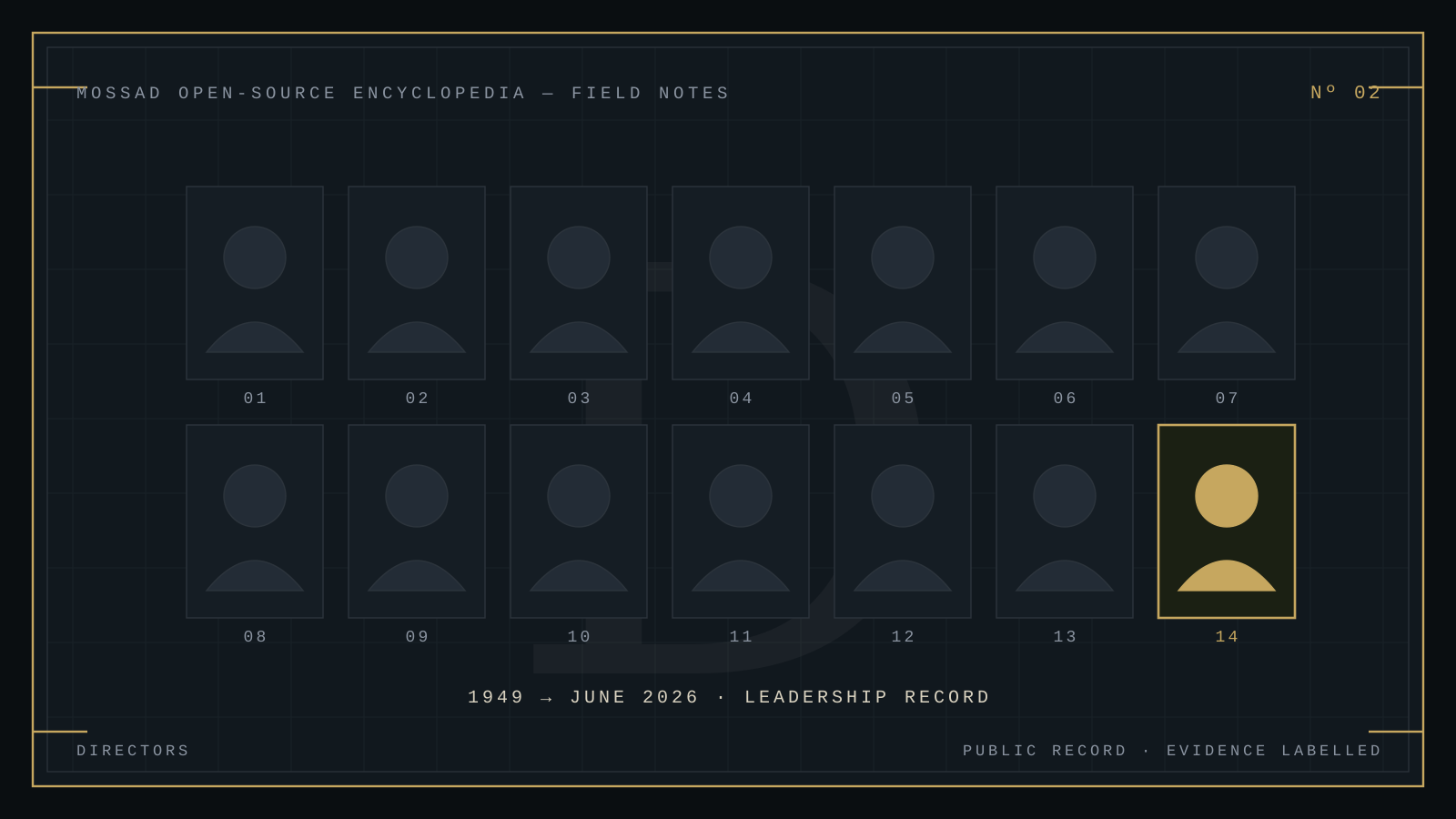
From Reuven Shiloah to Roman Gofman, fourteen directors have led the Mossad. Their tenures chart the service's evolution from a liaison-driven office into a modern intelligence agency.
Read the field noteTHE READING FILE
The book's master chronology runs from 1945 to the 2026 research cutoff. This note explains how to read a national intelligence timeline without mistaking sequence for causation.
The book closes with a practical source guide covering sixteen categories of public evidence — archives, court records, journalism, memoirs and more. This note explains how to use them.
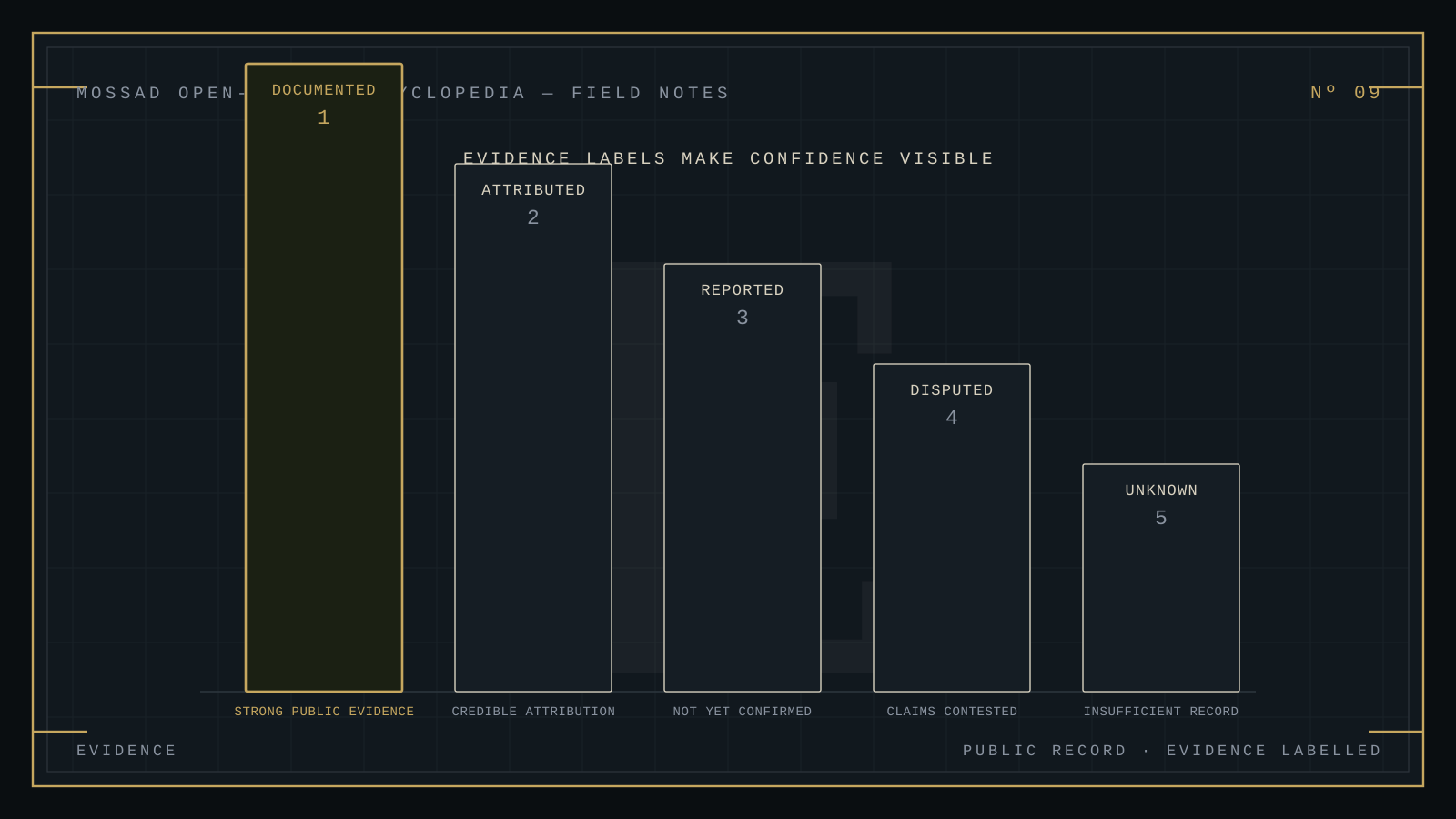
Why a responsible reference work uses visible evidence labels—and what each label tells the reader about the strength of the public record.
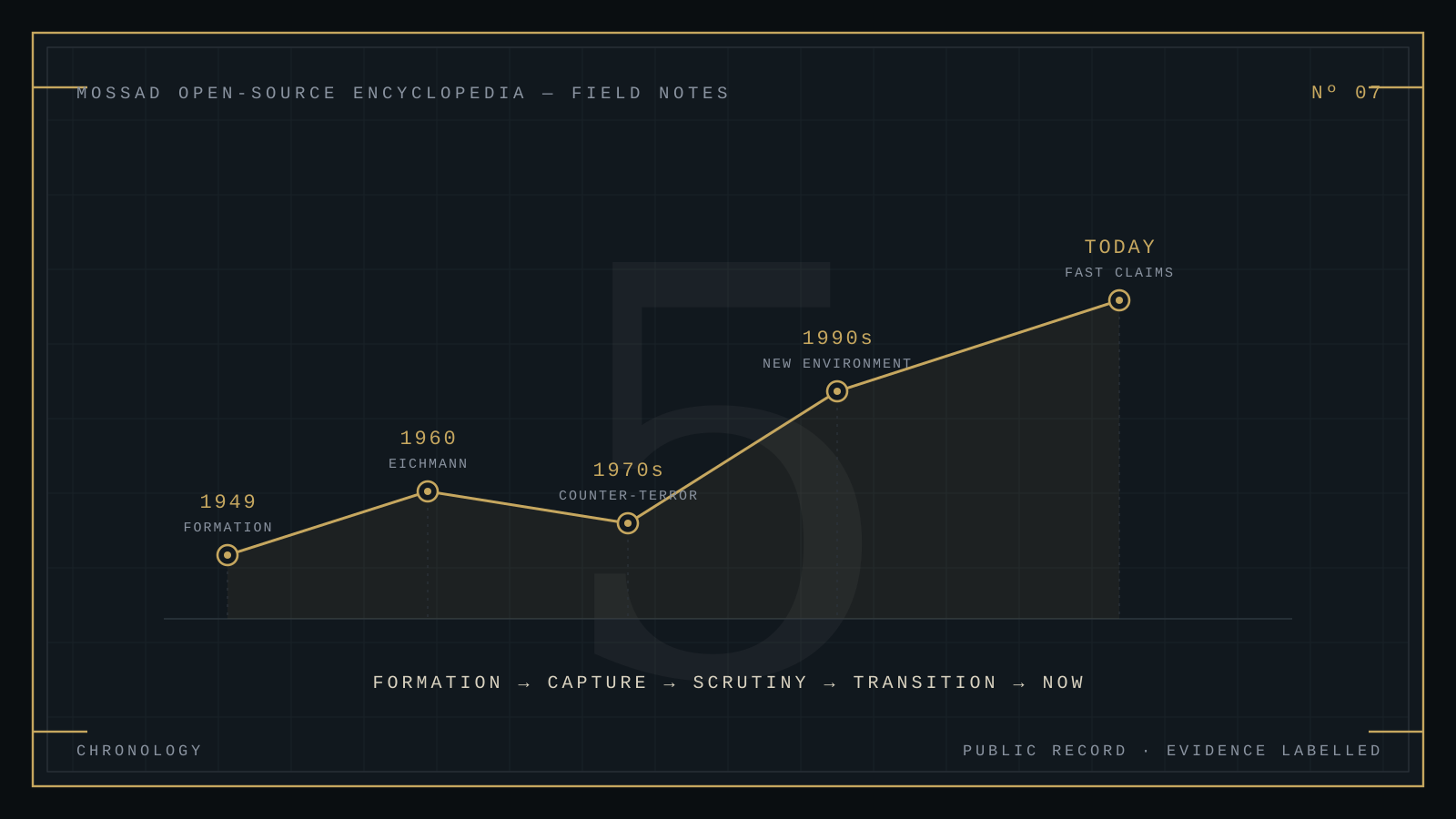
Five broad moments that help orient readers—from the institution’s early formation to the scrutiny surrounding modern intelligence claims.
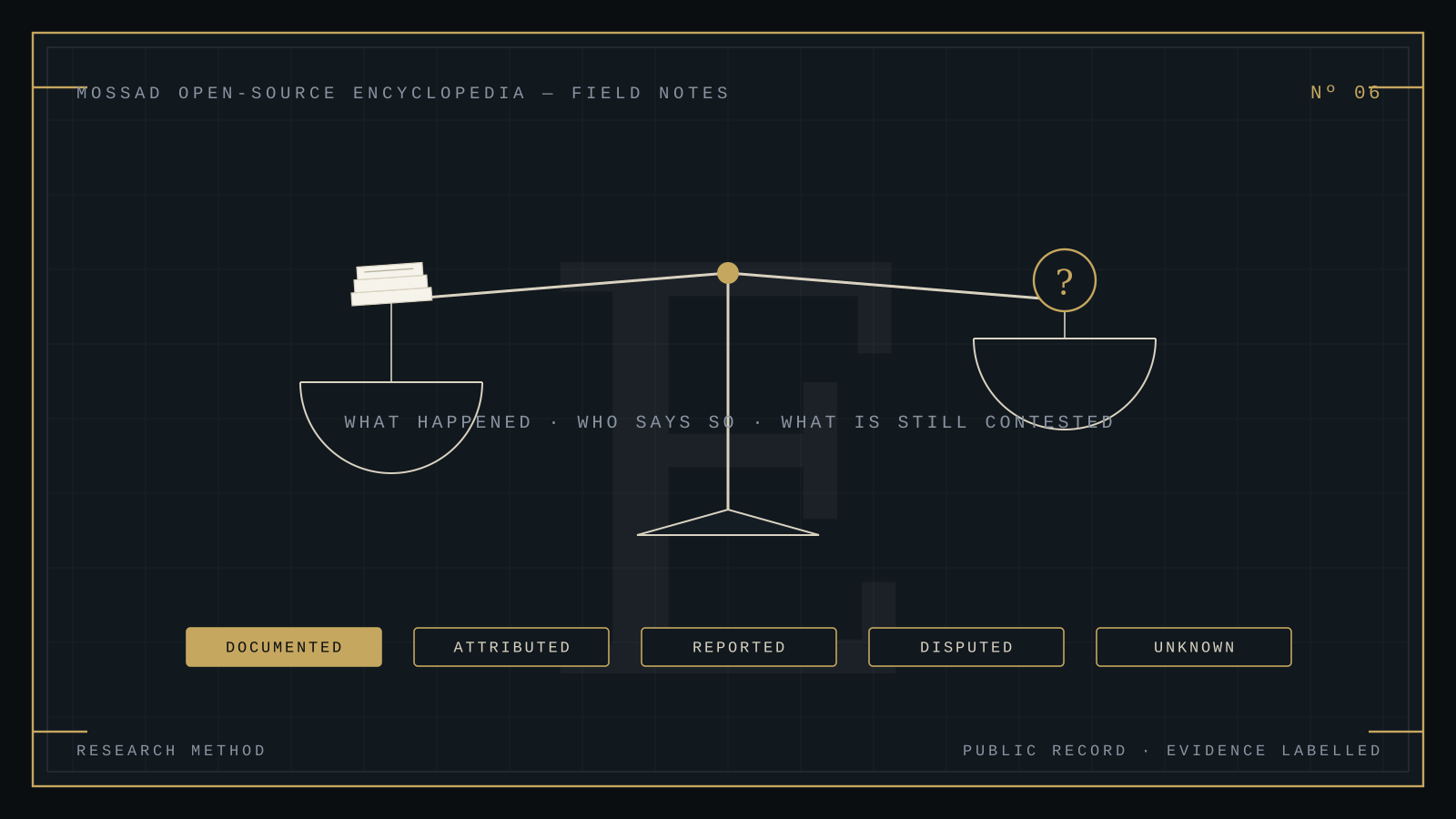
A practical framework for separating confirmed events, credible attribution, public reporting and unresolved speculation in intelligence history.
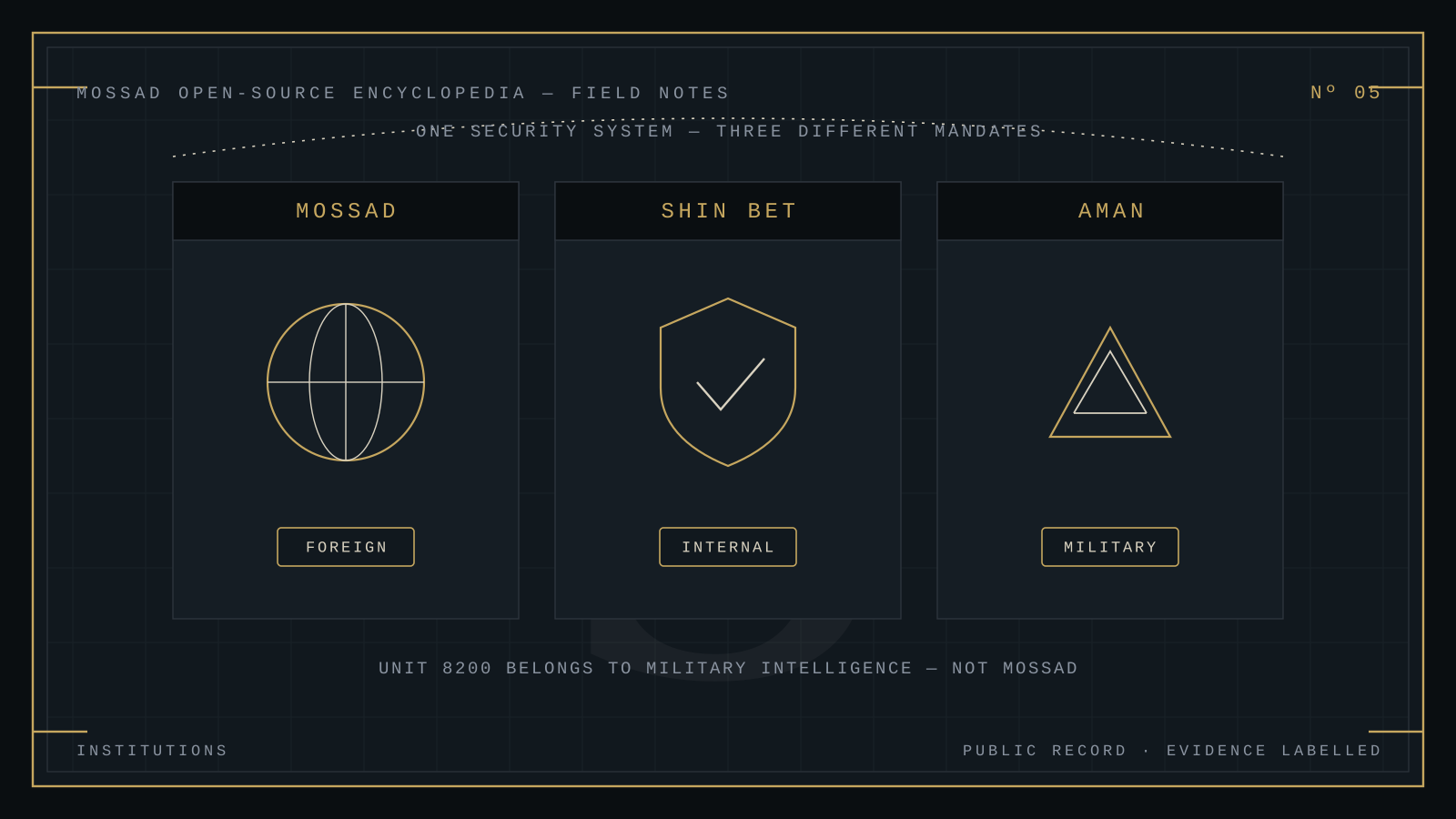
Three Israeli intelligence organizations are often treated as interchangeable. Their mandates, chains of command and public histories are not the same.
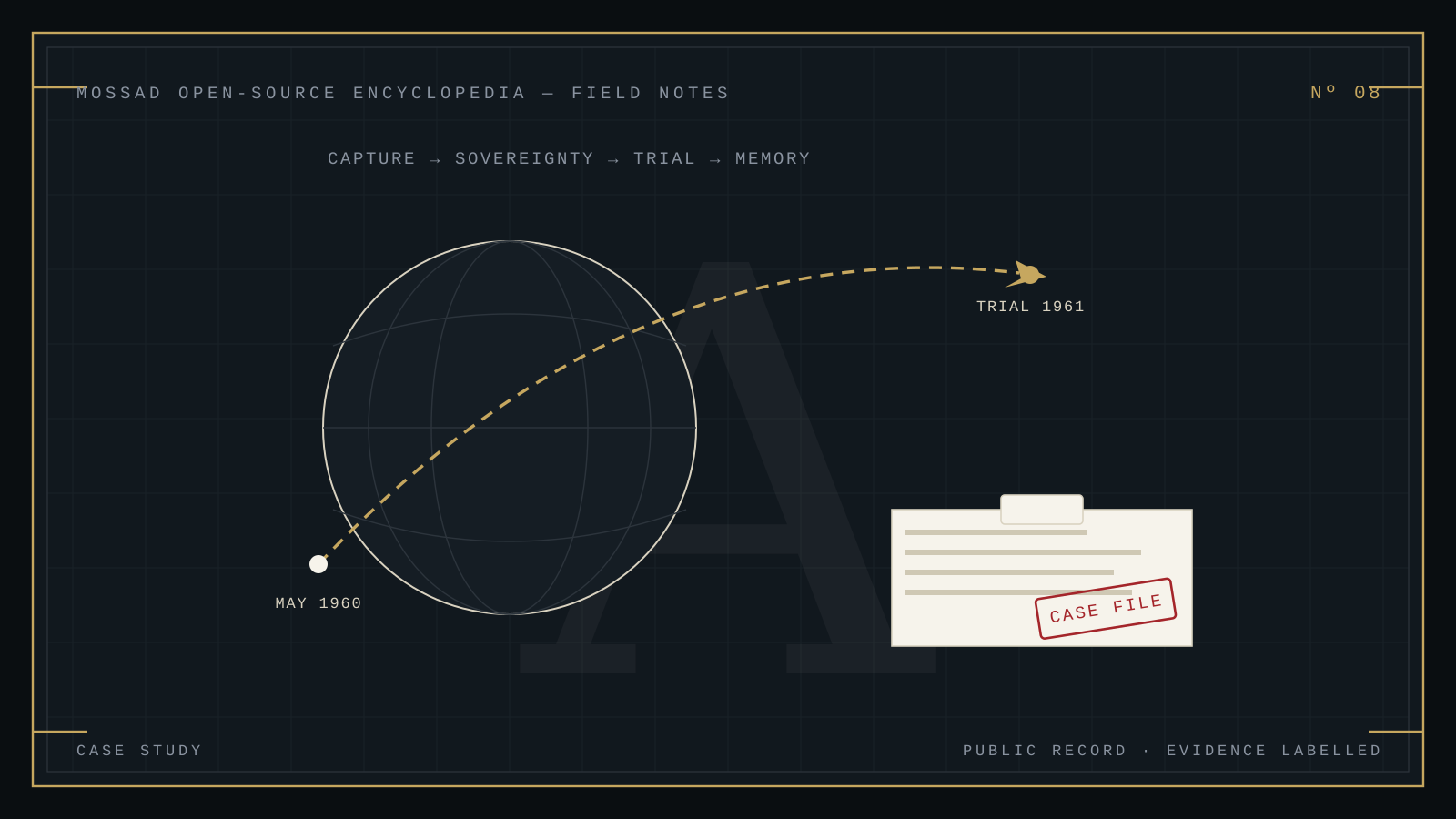
The essential documented outline of the 1960 capture—and why the legal and diplomatic consequences belong in the history alongside the operation itself.
A concise introduction to Mossad’s institutional role, the limits of the public record and why popular descriptions often blur separate Israeli agencies.
WHY THESE ARTICLES STOP EARLY