
Five Turning Points in Mossad’s Public History
Five broad moments that help orient readers—from the institution’s early formation to the scrutiny surrounding modern intelligence claims.
PUBLIC-RECORD OVERVIEW
A concise orientation
A useful Mossad chronology is more than a list of operations. It should show how institutional formation, political authorization, changing threats, new technology and public accountability altered the environment in which intelligence work was discussed.
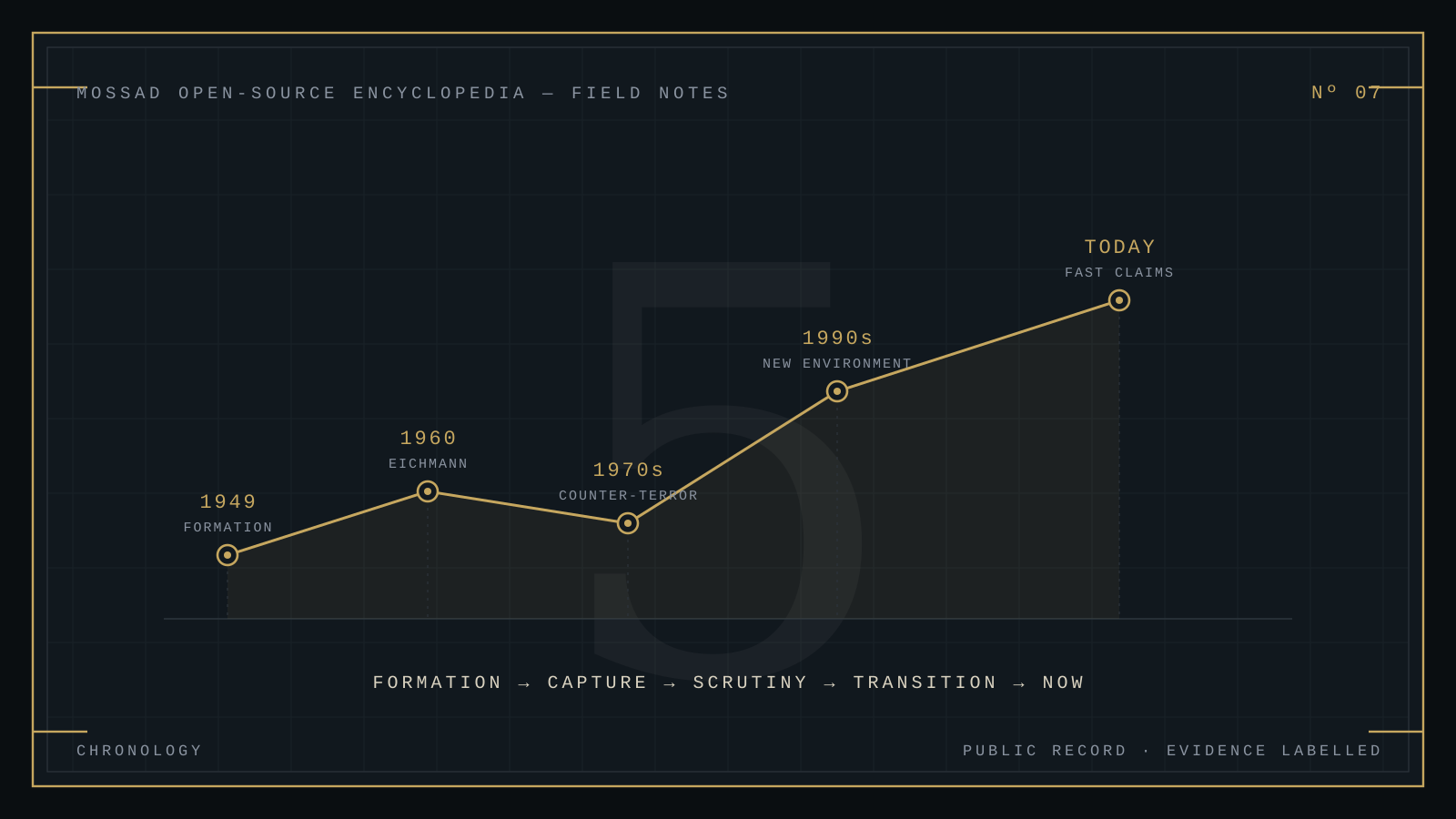
Five orientation points are especially useful: the early institutional period, the 1960 Eichmann capture, the global counterterrorism focus of the 1970s, the post-Cold War transition and the contemporary era of rapid reporting and disputed attribution.
KEY POINTS
What the public record supports
1949: early institutional formation
1960: the capture of Adolf Eichmann
1970s: international counterterrorism and heightened scrutiny
1990s: a changing regional and post-Cold War environment
Contemporary era: technology, proliferation concerns and faster public claims
EVIDENCE NOTE
Documented chronology
This field note uses a high-level summary only. Where attribution or important details remain uncertain, the complete encyclopedia distinguishes documented facts from reported, attributed, disputed or unknown claims.
RESERVED FOR THE COMPLETE EDITION
What the book adds
- The complete 21-milestone chronology
- Leadership changes and the political context surrounding each era
- Entry-level cross-references connecting dates, people and institutions
The full material is not reproduced in this article.