
How to Evaluate a Claim About a Mossad Operation
A practical framework for separating confirmed events, credible attribution, public reporting and unresolved speculation in intelligence history.
PUBLIC-RECORD OVERVIEW
A concise orientation
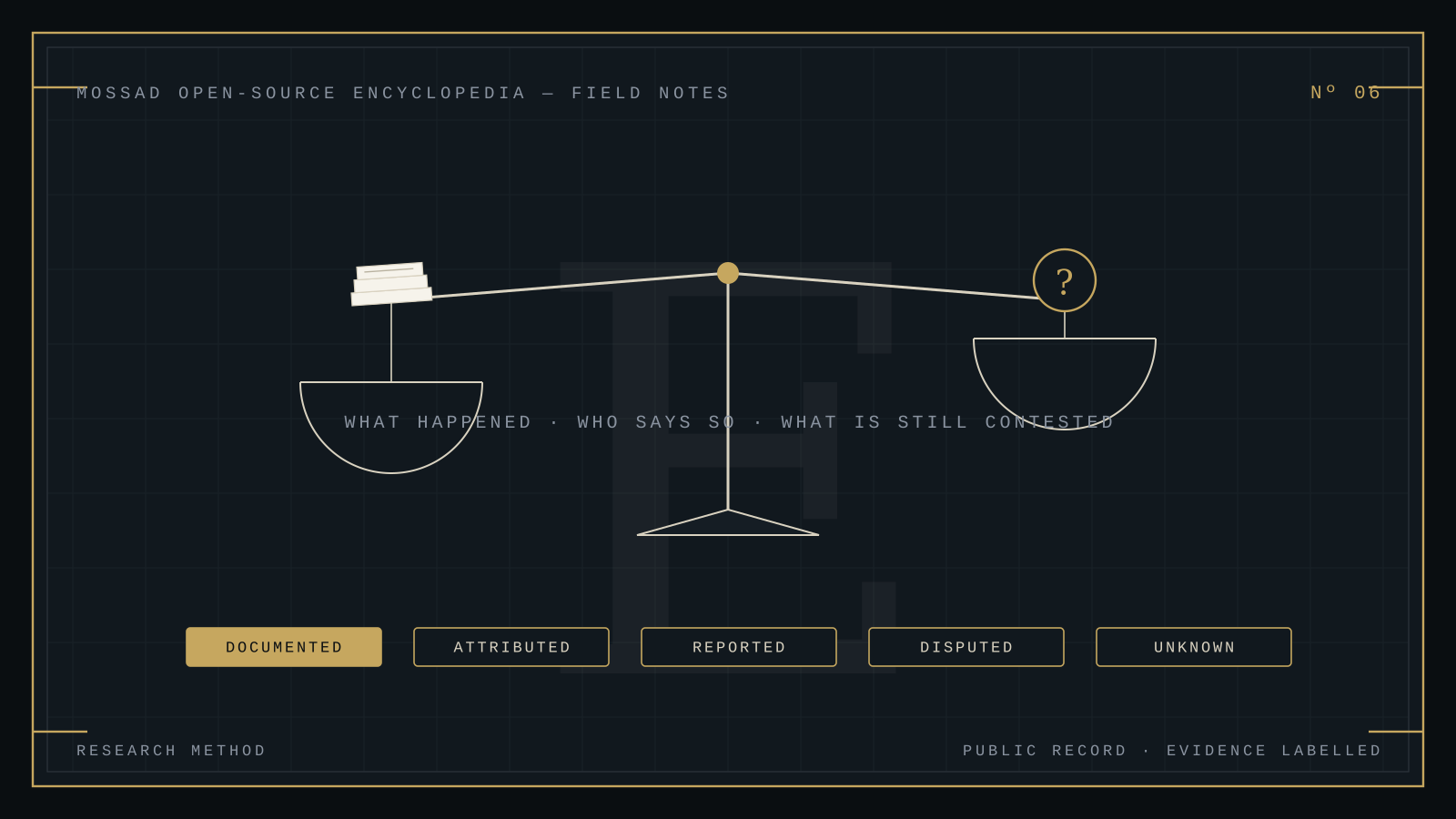
A dramatic event may be real even when responsibility for it remains uncertain. Evaluating a Mossad claim therefore requires separate questions: what happened, who reported the attribution, what evidence was presented and which important details remain contested.
Strong research preserves those distinctions. It does not turn repetition into proof, and it does not treat declassification as a guarantee that every statement inside a document is accurate.
KEY POINTS
What the public record supports
Separate the event itself from the claim about responsibility.
Prefer official records and court material where they exist.
Use reputable reporting for recent subjects while preserving attribution.
Mark unresolved details instead of filling gaps with inference.
EVIDENCE NOTE
Editorial method
This field note uses a high-level summary only. Where attribution or important details remain uncertain, the complete encyclopedia distinguishes documented facts from reported, attributed, disputed or unknown claims.
RESERVED FOR THE COMPLETE EDITION
What the book adds
- Documented, attributed, reported, disputed and unknown labels
- Source notes attached to individual entries
- Cross-references that expose conflicting accounts and common errors
The full material is not reproduced in this article.